Sunday, March 16, 2014

ANNOUNCEMENT

To all new and returning visitors, 

SoCal Fish N Tips will no longer be updated. However, I have started a new blog called
 N8 OUTDOORS. The new blog will have very similar content such as fishing, products reviews and fishing reports. I will also be including some firearms and shooting content. Please focus your attention to the new blog and feel free to spread the word. I'm looking forward to sharing my outdoor experiences with all of you!

Thanks

Nate Herrera


Monday, August 26, 2013

SoCal Jetty Fishing Basics

I just finished up writing a guest post for my bud Joe Sarmiento aka Socal Salty. He runs a great site called  Socal Salty that's filled with great info such as deep sea fishing, recipes, products reviews and fishing reports. If you want some information on offshore angling or you just want to know what they've been catching stop by his site. You won't be disappointed. 


Here is the link to my guest post on Southern California Jetty Fishing Basics


You can also follow Joe Sarmiento (SocalSalty) on social media

Twitter: @Socalsalty
Instagram: @Socalsalty
Web: www.socalsalty.com
Contact: SocalSalty@gmail.com


Friday, June 7, 2013

How To Pump For Ghost Shrimp

If you didn't know, ghost shrimp is one of the most effective live baits for a wide variety of species in Southern California. Buying live ghost shrimp at local tackle stores isn't an option to me because they are expensive in my opinion. Therefore, pumping for your own ghost shrimp is the way to go. In this blog post I will cover everything you need to know about pumping for ghost shrimp.


First off, you'll need to get a ghost shrimp pump. You can either build your own pump, or buy one at your local tackle shop. Tackle shops usually charge around thirty dollars and is well worth it if you like fishing.

Finding The Ghost Shrimp

My go to pumping location (channel)
A small group of burrows
There are areas all over Southern California that hold ghost shrimp. Most of the time, ghost shrimp can be found in muddy areas located in bays and channels that lead into harbors. At negative or low tide, you want to walk the shoreline and look for those muddy areas. Once you've located possible ghost shrimp locations, you'll want to take a closer look and try to identify ghost shrimp burrows. Ghost shrimp burrows are small holes in the mud that look very similar to ant holes. If you see thousands of burrows along the shore line you will know you're in the right spot. 


Four Easy Steps

  1. Place the bottom of the pump directly over the burrow
  2. Push down on the pump. Approximately 1" down
  3. Quickly pull up on the handle while pushing down on the pump
  4. Lift the pump out of the sand and push down on the handle, releasing sand and hopefully ghost shrimp
Helpful Hints


  • I like to pump near areas with vegetation (small patches of eel grass) I find these areas to be most productive.
  • Pump burrows that are moist or slightly covered with water. You don't want to pump out a dry clump of sand
  • Pumping at negative tide is ideal, but low tide is fine too
  • If you hear a slurp from the pump, it's a good pump 
  • You must have a fishing license to pump for ghost shrimp
  • The limit is 50 ghost shrimp per fishing license 


A quick clip of pumping ghost shrimp


Thursday, April 11, 2013

Plastic Bait Storage: Plano Liqua-Bait Locker Bottle

If you're anything like me, you've probably had one of those times when you fail to close your Berkley Gulp packages all the way, or you leave it out in the sun too long resulting in rock hard, shriveled up baits. These "failure to close" instances can also create a mess and leave unwanted odors in tackle storage devices. Thankfully, Plano has developed the Liqua-Bait Locker Bottle that solves these problems, and will have you more organized and mess free.
Plano Liqua-Bait Locker with a bottle of Gulp! Recharge
O-ring 
Design - The Plano Liqua-Bait Locker has a small, slim and sleek design.  It's big enough to hold a good amount of soft plastics, but small enough to put in small compartments. You can throw it in your tackle bags or boat compartments and forget about it. The bait locker is made of a hard durable plastic that can stand up to a beating. I've dropped it on concrete and even stepped on it without any issues. The main feature of this product is the o-ring inside the lid that makes the Liqua-Bait locker air tight and leak proof, ensuring your plastic baits remain fresh. The lid has ridges on it which make it easier for you to open and close with wet or slippery hands.

Applying Gulp Recharge
Add scent - The great think about the Liqua-Bait locker is that you can add scents to your plastics without having to worry about them drying up. It allows the baits to absorb and hold scents for a longer period of time. I strongly recommend buying a small bottle, or two, of Berkley Gulp recharge. Simply throw in your plastics and apply the Gulp recharge. If your'e going to fully stock the bait locker I would recommend filling it half way with scent to ensure there's enough juice to go around. The Gulp recharge does great with Gulp products. However, from my experiences, some soft plastics do not absorb the Gulp scent very well. Depending on the plastic, they will either shrink or become disfigured so keep an eye out. You can also use any scent of your choice. It doesn't necessarily have to be in liquid form. If you like to use a paste like scent, apply it to the plastics before putting it in the bait locker. Think of it as marinating meat before a bbq. The longer it marinates, the better.

Finished product


Thursday, February 28, 2013

Study Your Target Species

Whether your targeting saltwater or freshwater species, it's always helpful to have some knowledge of what your catching. Studying your target species is a simple, but effective solution to becoming better angler. In order to be a complete angler, it is important to not only know how to catch fish, but to know what they're about. In my opinion, fish knowledge goes much further than knowing what baits work the best. Other areas to consider when studying your target species are: diet, habitat, migration, spawning season, and of course regulations regarding that particular species.

There are many resources that are available for this type of information, but the two websites that have been most helpful to me are the California Department of Fish and Wildlife site and FishBase.

The California Department of Fish and Wildlife (formerly Department of Fish and Game) website has a lot of information for California native species, both fresh and saltwater. The site also gives you all the information you need regarding rules and regulations for specific species. You can either browse through the site or search directly on the top right corner.

Fish Base has some good, to the point, information for a wide variety of species. However, from my experiences Fish Base loads very slow so you'll have to be patient.


New 2013 Saltwater Bass Regulations 

Effective March 1, 2013, the California Department of Fish and Wildlife has changed saltwater bass regulations for conservation reasons. The following species are under these new regulations: Spotted Bay Bass, Calico Bass, and Barred Sand Bass. The new regulations are the following:

  •  14 inch minimum length with a legal filet length of 7 1/2 inches on all saltwater bass species (previously 12 inch minimum length)
  • 5 fish limit in any combination (previously 10 fish limit)

These new regulations are good for conservation so future generations will be able to enjoy these amazing species. However, they will have an effect on sport-fishing charters and tournament series. For example, these regulations are going to make it harder for sport-fishing charters to reach their bag limit. For tournament anglers the regulations make it harder to pull in legal sized bass to weigh in. From my standpoint, I'm okay with these new regulations because it will be conserving our fishery and making saltwater bass fishing that much more challenging.


For a full article on this topic CLICK HERE


Friday, November 2, 2012

Cabo San Lucas Surf Fishing Trip


This past week I had the pleasure of traveling to Cabo San Lucas and Puerto Vallarta, Mexico via Carnival cruise lines. With Cabo San Lucas being such a big fishing city, I couldn't pass up the opportunity to get some fishing time in. I met up with a local surf fishing guide by the name of Wesley Brough. Wesley has lived in Cabo a majority of his life and fishes the surf just about everyday. He's a very cool guy that sure knows where the fish are. 

The scenery
I met up with Wesley around 9:30am local time and headed straight to the water. He took me to a beach nearby because I was limited on time. The conditions were hot and humid, which Wesley said was "cooler" weather from what they've been having. We were using at least 9 foot rods, 50 pound braid, 100 pound mono leaders and topwater hard baits. It was a lot different than my usual 7 foot bass rods. We were hitting various rock structures and Wesley began hooking up with sea bass and Jack Crevalle. He told me to cast in between two rock structures and I was soon rewarded with my first sea bass in international waters. After that, we walked north where he said we can catch a certain kind of Jack he doesn't catch anywhere else. I casted out first but nothing took the bait. Wesley then casted out and on his retrieve you could see about 6 Jacks following the bait. It was an amazing sight to see. One Jack ended up going for it and Wesley hooked him. He passed the rod to me and I was in for the fight of my life. Just when I thought the fish was done it would take off again. After a couple tiring minutes I finally landed the biggest fish I've ever caught. I was shocked to see that you could catch fish of that size from surf. Words couldn't describe the excitement I felt. 

Having the opportunity to fish in Cabo San Lucas was truly a blessing. I was able to meet a fellow angler and catch some fish in one of the most beautiful places I've ever been to. It was a great experience and I was able to leave with some great memories. I can't say when I'll be back, but I can say I WILL be back with rod and reel in hand. 
If you're ever in the Cabo San Lucas area be sure to contact Wesley Brough. He's a real nice guy with a lot of experience, and he'll give you everything you need to get on some fish. 

www.WesleyBrough.com
Twitter: @cabosurfcaster
Email: Cabosurfcaster@yahoo.com


Friday, August 24, 2012

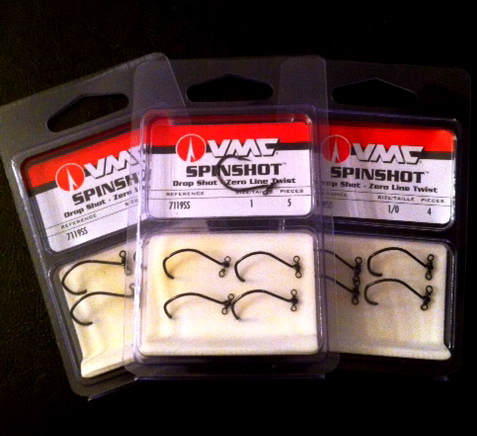
VMC Spinshot Drop Shot Hooks

If you're the type of angler that enjoys drop-shotting for bass like me, you might want to check out this product that can increase your hook sets and decrease your headaches. I'm talking about the VMC spinshot dropshot hooks. The VMC spinshot hook was introduced at the 2011 ICAST and has recently hit the shelves in tackle stores. Whether you fish the drop-shot in saltwater or freshwater this is a great product to have in your arsenal. 
Pictured are sized 1 and 1/0


These hooks help eliminate the problems that we experience while drop-shotting such as, snags, line twists, hook displacement, and missed hook sets. The spinshot has a swivel that runs through the eye of the hook that allows it to spin freely, while always staying in the upright position. You can fish the same rig all day and still have it looking like it did when you first put it together. This simple yet effective design gives me more confidence when throwing my line out because, I always know my hook is in the position it should be. 

 (Size 1) Notice the integrated swivel that
prevents line twist
Eighty percent of the time I fish the drop-shot rig. I can't count the number of times where I get snagged on some type of structure and my hook comes back upside down, or on its side. Even after catching a fish the same problem occurs. With the spinshot hook all those problems go away.

These hooks come in a variety of sizes from 8 to 1/0 for different sized baits. When rigging the spinshot hook I like to use a palomar knot on the top and a clinch knot on the bottom. That brings me to the one disadvantage of this product which is rigging it. It takes a little longer because you have to tie on a second piece of line that attaches the bottom of the hook to the sinker. The advantages definitely out weigh the disadvantages for this product. Overall, it's a great product to have if you like drop-shotting. I'm certainly happy to have them in my tackle box. 
Nose hooked on a Berkley Powerbait Twitchtail Minnow

*Note* I am not affiliated with VMC. I like to recommend products that work well for me, so they can work well for you.

Friday, May 18, 2012

San Diego Bay Bonefish

When I think of Bonefish I think of crystal clear, shallow water somewhere off the east coast. Bonefish are a target species for fly fisherman in locations such as Florida, the Bahamas, and other geographic locations. Who would have known that Bonefish can be found in Southern California?! Well I can tell you one thing, they ARE here and I hope they are here to stay for a very long time. 

I first read about Bonefish being in Southern California on the internet where anglers talked about how such great fighters they are. I soon made it a goal of mine to catch one of these fish and see what they were all about. After catching my first Bonefish I automatically understood what all the hype was about. All I can say is that Bonefish are an amazing fish and if I were to describe them in one word it would be, FUN! In the past year I've had the pleasure of catching a decent amount of bonefish. I now know where to find them and how to catch them. 

In my opinion, Bonefish aren't too hard to catch. You just need to know where to find them because they aren't in every part of the bay. From my experiences in south San Diego Bay, all Bonefish were caught in very shallow water. I'm talking about approximately 5 feet of water. I can literally jump off the boat and my head would still be exposed. The key is to find sandy beaches in the bay and get as close as you can to the shore if fishing from a boat. Try and set up a nice drift so you run right along the shoreline. There you will find them. 
As far as bait goes, I've only caught them on Ghost Shrimp, a very effective bait for all types of saltwater species in California. I like to rig Ghost Shrimp on a drop shot rig with a size 4 bait holder style hook and a 1/2 ounce weight. You can also catch Bonefish on fly fishing outfits just like they do on the east coast. You can also use a carolina rig as well. 

To ensure a good time, I recommend a light spinning outfit with 4 to 8 pound fluorocarbon line so the fish don't see your line. Make sure your drag is set because they WILL pull hard and fast. 

Lastly, make sure you hang on tight! If you have any other questions feel free to ask. Go get em!


Thursday, April 12, 2012

Night Fishing 101

Fishing at night is one of my favorite times to catch fish. If you're a night owl like me, you will find that night fishing is just as productive as fishing during the day, or even better. A majority of my fishing is done at night so I have my fair share of experience night fishing. Some of my best outings were at night, catching 15-20 fish in a couple of hours. Here are some tips that will help you that are based on my experiences on the water. 


Artificial Baits - Artificial baits are my go to option for night fishing. Swimbaits, swim grubs, grubs, worms, flukes, spinnerbaits etc. - they all work. One of my favorite go to baits is the Gulp! minnow on a drop shot rig. In my opinion, soft plastics are the way to go for bass, halibut, croakers and other bottom dwellers.

Black widow and midnight phantom
Big Hammer swimbaits
Colors - A general rule of thumb for most anglers is to use dark colored baits such as black for night fishing, because it brings out the silhouette in dark conditions. A lot of anglers swear by the "black widow" color that is common in swimbait and swimgrub products.  The all black color works great and I have caught a good number of fish on it. However, I've personally had better luck with colors such as blue/white and pearl white while fishing from shore. My theory is if your fishing from shore and there is a lot of surrounding light hitting the water, the lighter colors are a good option. If you're fishing deeper water on a boat or kayak I'd go with the darker colors.

Scents - Bait scents are a must at night. Fish are going to have a harder time seeing the presented bait, so scents will help steer the fish in the right direction. They will also leave a scent trail that will definitely attract fish. There are a number of good scents out there that have worked well for me. Check them out here

Techniques - When fishing at night I like to present my baits low and slow. I love using the drop shot rig because you can leave the bait in one place while still giving it action. The vibrations from the drop shot technique will entice fish. If your using swimbaits I like to use the stop and go retrieve. Slowly retrieve your bait three to four cranks, pause, and repeat. You can also slowly hop your bait back to you by lifting the rod top.

Live or cut bait - Ghost shrimp, mackerel, anchovies, squid, sardines etc. are great for a variety of species. Night time is great for sharks, stingrays, and bat rays using whole squid, whole mackerel or cut mackerel.

Safety and essentials - When fishing at night safety is very important. There aren't too many people around so it is important to have a fishing partner(s) with you. If going solo, be sure to have a cell phone or tell someone where you plan on going. Anything can happen.

The most important tool you can have is a flashlight or a headlamp. A headlamp will soon become your best friend at night. There's nothing worse than trying to rig your line or get a hook out of a fishes mouth
blind. I prefer a headlamp because it frees up your hands.

Monday, January 2, 2012

Goals for 2012

2011 was an overall good year of fishing for me. I put in a lot of time on the water and it really paid off. I learned some new things and caught a couple new species such as bonefish, sargo, and pile perch. I caught tons of fish especially over the summer, but I was missing something. QUALITY! Don't get me wrong, I love catching tons of fish in one outing, but I wouldn't mind giving up a fish or two for one really nice quality fish. I'm expecting 2012 to be a great year for me not just with fishing, but life in general. I'm really looking forward to trying new things and continuing to grow as an angler and as a person.

My Fishing Goals for 2012
  • Catch a Spotfin Croaker
  • Catch BIGGER fish
  • Start targeting and catching BIG Leapord Sharks and Bat Rays
  • Catch a topwater Corvina
  • Catch at Halibut bigger than 22"
  • Catch a fish on my Lucky Craft Flash Minnow
  • Find new fishing spots
  • Catch a freshwater Large Mouth Bass
  • Catch a freshwater Striped Bass
  • Keep learning and sharing 


Thursday, November 3, 2011

Shimano Stradic CI4 2500F Review

My latest addition to my tackle selection is the Shimano Stradic CI4 2500F spinning reel. I purchased this reel from Turners Outdoorsman here in San Diego, CA. At 199.99 retail, the CI4 is at the higher end of Shimano's spinning reel line up. The Stradic CI4 is just under the Sustain and Stella spinning reels, which are at the top of the list. I knew before I even bought the reel that I would not regret it because at least three Turners employees came up to me and said, "you're going to have fun with that reel, that thing is sweet!" Those comments only made me want to hurry up and get this reel some action!

First Impressions: From the first time I set eyes on this reel I automatically could see what makes this reel different from the others, because of it's black/charcoal grey and red colors. It's very different from the usual silver colored reels. The reel just has a stunning appeal to it. The other dramatic difference I noticed from other reels is that the CI4 is very very light. The difference in weight makes a world of a difference and I knew it was going to be a great drop shot reel.

Weight Comparison: At 7 ounces, the CI4 feels great in your hand. Compared to other reels of the same size the CI4 seems like a feather. The ultra-lightweight design of this reel makes fatigue not an option. You can fish this reel on a light weight rod for hours at a time without feeling fatigue on your wrist.

Drag: The drag on this reel is silky smooth. I had the pleasure of catching a handful of Bonefish (drag pullers) when breaking in this reel for the first time. All I can say is I never thought I would break off on a fish because the drag was so smooth and comfortable. The CI4 has a waterproof drag system that comes in handy especially for saltwater anglers like me.

Design: CI4 stands for Carbon Interfusion with the 4 referring to the number of electrons in the carbon atom. In other words, it means the CI4 is reinforced  carbon fiber. It is over one and a half times stronger  than the XT-7 graphite, which makes it stronger and lighter. Another plus for saltwater anglers is that the CI4 is impenetrable to rust. The round eva grips on the handle feel very comfortable on your fingers. It is cushiony as opposed to other hard plastic handles on other reels.

In conclusion, this reel is awesome! I highly recommend this reel if you have the extra money to spend. I am confident that you will have just as much fun with this reel as me. It has everything I would want in a reel, especially for drop shot fishing. Matched up with the right rod it makes for a very comfortable, fast and lightweight fish killer.

For more info and features on the Shimano Stradic CI4: Stradic Ci4

Thursday, October 6, 2011

Lucky Craft Flash Minnow 110 - Metallic Sardine

A couple months ago I did a little bit of research on using hard baits for surf fishing. Come to find out, there is a very popular hard bait used amongst Southern California surf anglers, which is the Lucky Craft 110. From my research I found that this lure catches BIG fish in the surf, such as Barred Surf Perch, Yellowfin Croaker and Halibut. Usually surf anglers use this lure to weed out the small dinky fish and target the bigger species. The Lucky Craft 110 does great for catching halibut in the surf, which is a very uncommon catch using traditional surf baits and rigs. The bait looks very realistic and has some nice flash to it that will attract fish.

Specs:
Length - 4.5 inches
Weight - 5/8 ounces
Depth - 1 to 2 feet
Buoyancy - Suspending

The only downside of this lure I have found is that it's a bit on the pricey side, and can be hard to find in tackle stores and on the internet. At the price of 19.99 per lure you don't want to see this lure go flying into the ocean on your first cast.


How to fish: So far from what I've researched, fishing this lure is fairly simple. It's a simple cast and slow retrieve. You can also add in a couple pauses or jerks in between. From what I hear, the bite feels very aggressive and you'll know if you have a fish on. It is important to use heavier line than usual when using this bait to help prevent losing it. There are certain times and conditions where this bait truly performs, but I have yet to figure that out yet. Its something that I have to figure out myself and put time in on the water to see what this bait is capable of.

Thursday, July 14, 2011

Surf Fishing 101

Surf fishing is most definitely my favorite type of fishing to do. The open ocean, crashing waves, scenery and ocean breeze make surf fishing an enjoyable outdoor activity. In addition to the great scenery, surf fishing is endless. You will probably never run out of spots to surf fish because of the hundreds of miles of beaches. I'm now going to provide some tips and techniques that I have learned over the past couple years. These recommendations will have you catching fish from the surf in no time.

Rigs - The carolina rig is the most common surf fishing rig used on the West Coast and is highly recommended. This is the carolina rig in order from top to bottom: Egg sinker, bead, swivel, around two feet of fluorocarbon line and hook. It is a simple yet effective rig that will definitely work.

Rods - For fishing the surf, I do not recommend anything under 7' because you will need a rod long enough to keep your line over the waves that will be crashing right in front of you. Many surf anglers use rods from 7' to 9'. I currently use a 7' Shimano Clarus rod that works fine, but I will eventually change that to 7'6". Use a rod that has a medium-light to medium action that will give you enough backbone to fight fish in the surf. The rod should have a fast to extra fast taper so you are able to set the hook effectively. Overall, you want a long, sensitive rod that has the ability to fight a big fish.

Reels - I recommend using a 2500 size spinning reel for surf fishing. In my opinion, the 2500 size is a nice light sized reel that won't tire out your wrist very much.

Sinkers - Depending on the surf conditions, you want to use sinker sizes from 1/2 ounce to 1 ounce. Strong currents and big waves call for heavier sized weights. I almost always use sizes such as 3/4 ounce and 1 ounce. 

Hooks - Smaller size hooks are recommended for surf fishing because some of the most common surf species have small mouths. You don't want a big hook that will have you missing bites all day. I like to use size #4 baitholder style hooks or size #2 Owner Mosquito hooks. In my opinion, these size hooks do the very well in the surf. 

Line - I almost always use 8 pound fluorocarbon line. Using light line makes fighting fish more fun and is strong enough to land them. You can use line sizes from 6 to 12 pound test in the surf. I recommend using fluorocarbon line for the leader because it is virtually invisible under water. Light line equals more fun, but you run the risk of loosing the big one. 

Bait - Ghost shrimp, sand crabs, mussel, Berkley Gulp Camo Sand Worms "CrAcK", Perch grubs in motor oil red flake (MORF) color. They WILL all work great!


Basic Tips - When your ready to cast you want to time the waves. Wait for the waves to crash then cast over them into the flat water. I like to have my rig starting in between the breaks. The waves will eventually start moving your rig towards you. Just make sure to ALWAYS keep your line tight so you can feel the bite. You can either let the current or waves take your rig or you can cast out and slooowly reel it back towards you. Sometimes you may feel like your getting bit but it can be the waves crashing down on your rig, so be sure to pay attention. The usual perch bite will feel like a shock or a really fast tapping feeling.

P.S. You'll be surprised how close the fish really are to the shore. Go get em!

Corbina caught on a sand crab

Thursday, June 30, 2011

Some Recent Catches

Here are some recent notable catches I've caught within the past week.


Sargo caught in Carlsband beach using ghost shrimp
Same fat perch 


Sunday, June 19, 2011

Fish Report: Finally a Sargo

During my work vacation me and my friend Tony pumped some ghost shrimp and headed out to the San Diego Bay. We were finally able to catch a nice incoming tide for once, which is a great time to fish. The weather conditions were fairly nice with a little wind coming at us.

I began casting into a spot where I know there's some nice structure where fish like to hang around. Within my first couple casts, BOOM! My rod bends and I set the hook. As I'm fighting the fish I knew it was either a Sargo or a Croaker because of the way it was fighting. The fish was pulling drag on my reel and when it finally surfaced it was a Sargo. I suddenly had a big smile on my face because I had made the Sargo number one on my most wanted list. Sargo have some nice power to them which means a fun fight, especially on light tackle.

I also caught  some nice yellowfin croaker and spotted bay bass as well. All fish were caught on ghost shrimp on a drop shot rig and a 1/2 ounce torpedo sinker.


Wednesday, June 8, 2011

Storing Ghost Shrimp

Knowing how to store your ghost shrimp overnight is a good thing to know. Whether you are saving them for a future date or you have some left over, these tips will help you keep them alive.

Things You'll Need

  • Plastic container of some sort 
  • Paper towels or anything that will absorb water
  • Ice or ice pack
  1. Soak one the one of the paper towels in saltwater or water from the sink. I prefer saltwater though
  2. Lay the damp paper towel in the plastic container or on a flat surface
  3. In the middle of the paper towel, put about 10-15 ghost shrimp in there trying not to overcrowd them too much. You must allow space for flaps to fold over the ghost shrimp
  4. Fold the flaps over the ghost shrimp
  5. Keep repeating the process. There should be layers of paper towels in your plastic container
  6. Throw the plastic container in the refrigerator or in a cooler with ice/ice packs


The most important thing to keep in my when storing ghost shrimp is to keep them COOL. You don't want them to be too cold either. This method should keep the ghost shrimp alive for a couple of days. When you look at them the next day they may look dead, but once you touch them they should become lively again. You'll know when they are dead because there will be a strong odor and they will be soft and mushy to the touch. Try to keep them cool even when transporting and when your out fishing. 

Thursday, June 2, 2011

Shovel nose guitar fish

Shovel nose guitar fish caught in Imperial Beach, CA on Ghost Shrimp

Sunday, May 29, 2011

Report: My first Corvina

Me and my buddy Tony decided to have a change of pace and soak some ghost shrimp on the Coronado Ferry Landing pier in Coronado, CA. I heard of anglers catching big Sargo and yellowfin croaker at the pier, so we gave it a shot. The tide was very low when we got there and it was still dropping, but we still made the best out of it. We didn't catch any of our target species (Sargo), but we did manage a nice little variety of fish. I also scored my first Corvina which made be pretty happy. My technique of casting the ghost shrimp out and slowly reeling it back worked out for me.

Bait of choice: Ghost Shrimp, drop shot rig, 1/2 ounce torpedo sinker, #1 size baitholder style hook

Fish Count: 4 Spotted Bay bass, 1 Calico bass, 2 Sculpin, 1 Lizard fish, 1 Sand bass, 1 Corvina

My first Corvina. Not too big but I scratched one off the list

 The View


Tuesday, May 17, 2011

Increase your chances : Bait Scent

Using scent is a great way to increase your chances when fishing in salt or freshwater. In my opinion, bait scent makes a world of a difference when fishing artificial baits. There are plenty of different scents on the market from krill to squid. So, if your not using bait scent you should start. You won't regret it.
My current scents. UniButter and Gulp Alive shrimp flavor

Why use bait scent?
  • It eliminates human scents such as lotions, sunscreen, cigarettes and cigars
  • It leaves a scent trail that will attract a fish from a distance 
  • When fish bite they stay on the bait longer because it tastes like the real thing, which means better chances of landing the fish
  • Leaves a nice slimy coat on your bait
  • Keeps your bait from drying up, leaving a more life like action
Some popular scents
  • Uni Butter - Most powerful scent in my opinion
  • Hot Sauce - Another effective scent
  • Berkley Gulp! Alive - Powerful scent that comes in easy spray bottle
  • Eagle Claw - Many different flavors from squid to anchovy with glitter
  • Pro Cure - I have never tried them but have heard good things. Tons of different flavors
Personally, my favorite go to scent right now is Uni Butter because of it's powerful smell and it's ability to increase my fish count. However, other bait scents like the ones listed above can be just as effective. It' s really up to you. The thing I like about the Berkley Gulp spray bottle is that it is easier to apply and less messy. Just be careful to not touch your face after handling bait scents unless you want to smell it all day long =p. That's the only thing you'll regret about using scents.